
Given how quickly and continuously everything is changing these days, it is essential to understand analytically the functioning of supply chains and to be able to know what strategies will produce the best results. This requires greater attention to creating supply chain solutions that are effective and efficient. Growth is our mantra as an organization. We know that if you’re not growing, you’re dying. So we have to make sure that in the supply chain organization, we’re positioning ourself for that growth.
Operating successfully today requires organizations to become much more involved with their suppliers and customers. As global markets expand and competition increases, making products and services that customers want means that businesses must pay closer attention to where materials come from, how their suppliers’ products and services are designed, produced and transported, how their own products and services are produced and distributed to customers, and what their direct customers and the end-product consumers really want.
Over the past twenty-plus years, many large firms or conglomerates have found that effectively managing all of the business units of a vertically integrated firm—a firm whose business boundaries include former suppliers and/or customers—is quite difficult. Consequently, firms are selling off many business units and otherwise paring down their organization to focus more on core capabilities, while trying to create alliances or strategic partnerships with suppliers, transportation and warehousing companies, distributors and other customers who are good at what they do. This collaborative approach to making and distributing products and services to customers is becoming the most effective and efficient way for firms to stay successful—and is central to the practice of supply chain management (SCM).
and efficient. Growth is our mantra as an organization. We know that if you’re not growing, you’re dying. So we have to make sure that in the supply chain organization, we’re positioning ourself for that growth.
Operating successfully today requires organizations to become much more involved with their suppliers and customers. As global markets expand and competition increases, making products and services that customers want means that businesses must pay closer attention to where materials come from, how their suppliers’ products and services are designed, produced and transported, how their own products and services are produced and distributed to customers, and what their direct customers and the end-product consumers really want.
Over the past twenty-plus years, many large firms or conglomerates have found that effectively managing all of the business units of a vertically integrated firm—a firm whose business boundaries include former suppliers and/or customers—is quite difficult. Consequently, firms are selling off many business units and otherwise paring down their organization to focus more on core capabilities, while trying to create alliances or strategic partnerships with suppliers, transportation and warehousing companies, distributors and other customers who are good at what they do. This collaborative approach to making and distributing products and services to customers is becoming the most effective and efficient way for firms to stay successful—and is central to the practice of supply chain management (SCM).
COURSE MATERIAL:
- Chopra_scm5_ch01
- Chopra_scm5_ch02
- Chopra_scm5_ch03
- Chopra_scm5_ch04
- Chopra_scm5_ch05
- Chopra_scm5_ch06
- Chopra_scm5_ch07
- Chopra_scm5_ch08
- Chopra_scm5_ch09
- Chopra_scm5_ch10
- Chopra_scm5_ch11
- Chopra_scm5_ch12
- Chopra_scm5_ch13
- Chopra_scm5_ch14
- Chopra_scm5_ch15
- Chopra_scm5_ch16
- Chopra_scm5_ch17
- Chopra_scm5_ch18
LINK eBooks:
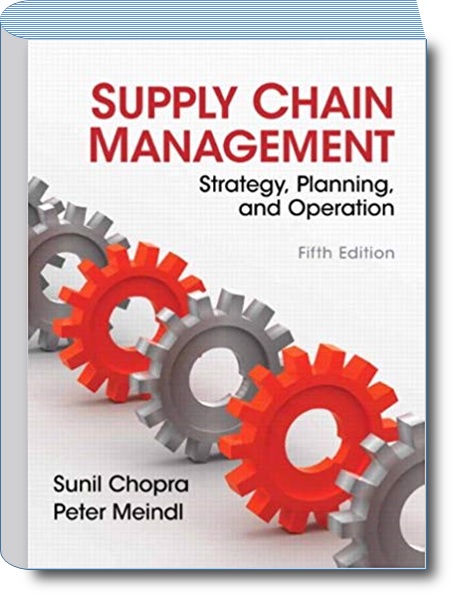
Anda juga dapat download eBooks Supply Chain Management (Chopra-Meindl). Silahkan klik di sini.
Materi Kuliah S1 Manajemen UNU Purwokerto
- Kontrak Pembelajaran
- Bab 1. Memahami Rantai Pasokan
- Bab 2. Kinerja Rantai Pasokan
- Bab 3. Faktor Pendorong dan Metrik Rantai Pasokan
- Bab 4. Merancang Jaringan Distribusi
- Bab 5. Desain Jaringan di Rantai Pasokan
- Bab 6. Merancang Jaringan Rantai Pasokan Global
- Bab 7. Peramalan Permintaan di sebuah Rantai Pasokan
 Sophora